Metro bus tour in Hollywood, CA

Public Transportation Options in Hollywood, CA: Connecting the Entertainment Capital

Taking The Bus to Your Hollywood Bus Tour

Hollywood, California, for decades known as the epicenter of the global entertainment industry, is a vibrant and bustling neighborhood within the confines of the city of Los Angeles. Famous for its ubiquitous tours of Hollywood, iconic Walk of Fame, historic silent-era theaters, and of course everyone’s favorite, the Hollywood Sign, this tourist-friendly attracts millions of visitors each year many of whom opt to take a bus tour of celebrity homes. However, the high population density and traffic congestion in the area make public transportation a crucial component of the city’s infrastructure. In this essay, we will explore the extensive public transportation options available in Hollywood, emphasizing their significance in reducing traffic congestion, promoting sustainability, and facilitating seamless mobility for residents and tourists alike.

  1. Metro Rail

One of the most prominent public transportation options in Hollywood is the Metro Rail system, operated by the Los Angeles County Metropolitan Transportation Authority (Metro). The Metro Rail consists of multiple lines, with two of them serving Hollywood: the Red Line and the Purple Line.

The Red Line, also known as the “Hollywood/Highland” station, provides direct access to some of the most famous landmarks in the area, including the Hollywood Walk of Fame, TCL Chinese Theatre, and the Dolby Theatre (home to the Academy Awards). The Red Line connects Hollywood to Downtown Los Angeles, North Hollywood, and Universal City, making it a popular choice for both residents and tourists.

The Purple Line extension, currently under construction, aims to further enhance public transportation connectivity in Hollywood. Once completed, it will provide an underground link from Downtown Los Angeles through Koreatown, Miracle Mile, and Beverly Hills, eventually reaching Westwood. This expansion will offer even more convenient options for travelers and commuters within Hollywood and beyond.

  1. Bus Services

In addition to the Metro Rail system, Hollywood boasts an extensive network of bus services that crisscross the neighborhood and connect it to other parts of Los Angeles. The Metro bus system, which includes local, Rapid, and Express routes, offers a flexible and affordable way to navigate Hollywood and its surrounding areas.

Local buses like Metro Lines 2 and 4 provide essential transit within Hollywood, serving neighborhoods such as Hollywood Hills, East Hollywood, and West Hollywood. They are a lifeline for residents, making it easier to access schools, businesses, and amenities without relying on personal vehicles.

Rapid buses, such as Metro Line 704, provide a quicker way to traverse the city. They make fewer stops, making them ideal for those who need to reach their destinations promptly. The 704 Rapid bus, for example, connects Hollywood to Downtown Los Angeles and Santa Monica, offering a convenient link to the beach.

Express buses like Metro Line 501 offer a direct connection from Hollywood to other parts of Los Angeles County. These buses are particularly beneficial for commuters traveling longer distances, as they minimize travel time by bypassing many local stops.
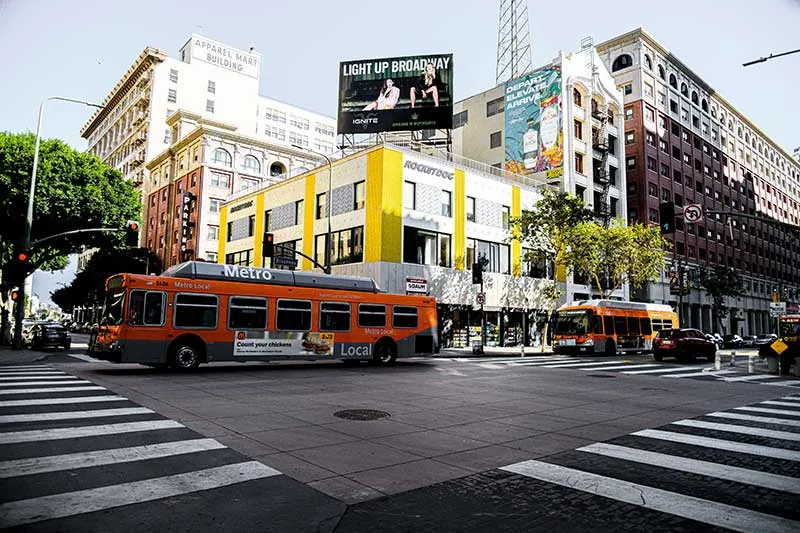
Metro bus tour in Hollywood, CA

Metro bus tour in Hollywood, CA

  1. Metro Bike Share

To further encourage sustainable transportation, Hollywood offers a Metro Bike Share program. This initiative allows residents and visitors to rent bicycles conveniently and explore the neighborhood at their own pace. Bike-sharing stations are strategically placed throughout Hollywood, making it easy to access this eco-friendly mode of transportation.

With bike lanes and dedicated paths, Hollywood is becoming increasingly bike-friendly, enabling riders to reach their destinations quickly and enjoy scenic routes while reducing their carbon footprint.

  1. Ride-Sharing Services

While public transportation options are prevalent in Hollywood, ride-sharing services like Uber and Lyft also play a significant role in the area’s transportation ecosystem. These services provide a convenient and flexible means of getting around, especially for those traveling to locations not directly serviced by public transit.

Ride-sharing complements public transportation by offering the first-mile and last-mile connectivity. Passengers can use ride-sharing services to reach Metro stations or bus stops efficiently, bridging the gap between their homes or hotels and public transit hubs.

  1. Accessibility for All

Public transportation in Hollywood is designed to be inclusive and accessible to people of all abilities. Metro buses and trains are equipped with features such as ramps, wheelchair spaces, and priority seating to accommodate passengers with mobility challenges. Additionally, audio and visual announcements make it easier for individuals with visual or hearing impairments to navigate the system.

Hollywood’s commitment to accessibility extends beyond vehicles. Sidewalks, bus stops, and transit stations are designed to be wheelchair-friendly, ensuring that everyone can comfortably use public transportation.

  1. Environmental Benefits

One of the most significant advantages of public transportation in Hollywood is its positive impact on the environment. Los Angeles, like many major cities, faces challenges related to air quality and greenhouse gas emissions. Public transit reduces the number of cars on the road, leading to decreased congestion and lower emissions.

The expansion of Metro Rail lines and the promotion of bike-sharing programs are part of the city’s efforts to encourage sustainable transportation choices. By choosing public transit or biking, individuals can contribute to reducing the city’s carbon footprint and improving air quality.

  1. Economic Benefits

Public transportation also offers economic benefits to Hollywood and its residents. By providing reliable transit options, the city supports the workforce and enables people to access employment opportunities throughout the region.

The presence of efficient public transportation can also increase property values and stimulate economic development. Businesses near transit stations often experience higher foot traffic, leading to increased revenue. Additionally, well-connected neighborhoods tend to attract investors, developers, and new residents, further boosting the local economy.

  1. Reducing Traffic Congestion

Hollywood is notorious for its traffic congestion, particularly along major thoroughfares like Hollywood Boulevard and Sunset Boulevard. Public transportation serves as a viable solution to this issue. By enticing people to leave their cars at home and use buses or trains instead, public transit alleviates congestion, reduces travel times, and eases the stress associated with navigating through heavy traffic.

The Metro Rail lines, in particular, have been instrumental in reducing traffic in Hollywood. Commuters who previously relied on their cars have found a more efficient and time-saving alternative in the Metro Red Line, which connects Hollywood to downtown Los Angeles in about 15 minutes during peak hours.

  1. Entertainment and Tourism

Hollywood is a global hub for entertainment, attracting millions of tourists each year. Public transportation plays a vital role in catering to the needs of these visitors. Tourists staying in Hollywood hotels often rely on public transit to explore the city’s attractions, from the Hollywood Sign and Griffith Observatory to Universal Studios and the Hollywood Bowl.

By offering convenient and affordable transportation options, Hollywood ensures that tourists can experience the glamour and excitement of the entertainment capital without the stress of driving in unfamiliar surroundings. This accessibility enhances the overall tourism experience and contributes to the economic prosperity of the district.

  1. Future Developments and Challenges

While Hollywood’s public transportation system has made significant strides in recent years, challenges remain. The expansion of the Purple Line and continued improvements to bus services are essential steps toward enhancing connectivity. However, funding and infrastructure development are ongoing concerns.

Another challenge is the need to balance the growth of public transportation with the preservation of the neighborhood’s unique character and historic landmarks. Hollywood’s iconic theaters and landmarks must be protected while accommodating new transit infrastructure.

In conclusion, public transportation in Hollywood, CA, plays a vital role in connecting the entertainment capital to the rest of Los Angeles County. With the Metro Rail system, extensive bus services, bike-sharing programs, and ride-sharing options, residents and visitors have a wide range of choices for getting around the neighborhood. Hollywood’s commitment to accessibility, sustainability, and economic development ensures that public transportation will continue to be a driving force in reducing traffic congestion, promoting environmental stewardship, and facilitating seamless mobility in this iconic district.

Startracktours.com/

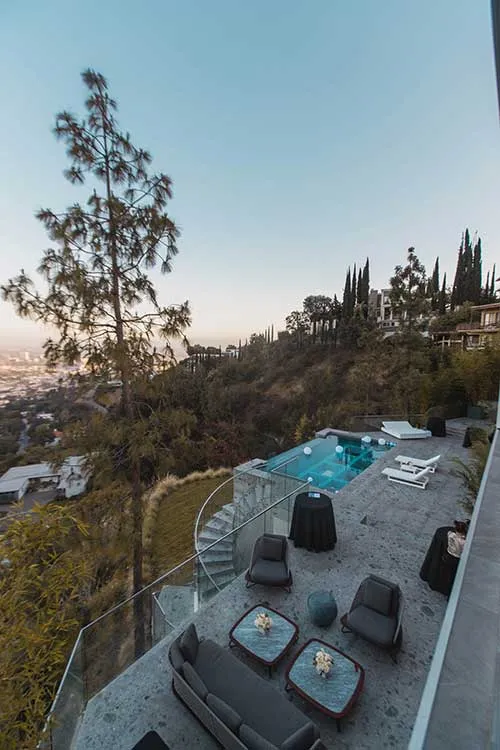
Spectacular home on Beverly Hills bus tour

The 120 Million Home on Beverly Hills Bus Tour

Manor at Holmby Hills a Draw for Hollywood Tourists

Tours of Beverly Hills are not complete without showing visitors some of the highest-priced homes in the world. Included in that list is the former Aaron Spelling estate. It could be yours for a measly $120 million.

Beverly Hills, an affluent city located in Los Angeles County, California, is renowned for its opulent lifestyle and luxurious real estate. It’s a place where the rich and famous flock to live, and as a result, some of the highest prices ever paid for homes in the United States can be found within its prestigious zip codes. In this essay, we will delve into the world of Beverly Hills real estate, exploring the factors that make it so desirable, the history of extravagant home sales, and some of the highest prices ever paid for homes in this iconic city.

Spectacular home on Beverly Hills bus tour

Spectacular, pricey home on Beverly Hills bus tour

Beverly Hills: The Epitome of Luxury Living

Beverly Hills, often referred to simply as “90210,” is synonymous with luxury, glamour, and exclusivity. It’s a city that has long been associated with the entertainment industry, with its palm-lined streets housing some of the most prominent actors, musicians, and entrepreneurs in the world. This allure, coupled with a Mediterranean climate and a picturesque setting in the foothills of the Santa Monica Mountains, makes Beverly Hills one of the most desirable places to live globally.

One of the key factors that contribute to the astronomical prices of homes in Beverly Hills is its location within the Los Angeles metropolitan area. It’s strategically positioned, offering easy access to the bustling entertainment industry in Hollywood, the business hubs of downtown Los Angeles, and the beautiful beaches of Santa Monica. For many high-net-worth individuals, this central location is an undeniable draw.

Moreover, Beverly Hills boasts a unique charm and character. Its tree-lined streets are lined with meticulously maintained mansions, some dating back to the early 20th century, featuring architectural styles ranging from Spanish Revival to Modernist. The city is also renowned for its luxurious shopping on Rodeo Drive, world-class dining, and top-notch schools. All of these factors contribute to the city’s cachet, attracting the wealthiest individuals from around the world.

A Brief History of Beverly Hills Real Estate

The history of Beverly Hills as a luxury real estate destination can be traced back to the early 20th century. Before it became the glamorous city we know today, it was primarily a lima bean ranch. However, the arrival of the Beverly Hills Hotel in 1912 marked the beginning of its transformation into a haven for the rich and famous.

In the 1920s, a major real estate boom took place, and grand estates started to spring up throughout the area. Beverly Hills’ reputation as a desirable place to live was further cemented when it was incorporated as a city in 1914. The city’s governance took an active role in preserving its luxurious image by implementing strict zoning regulations, ensuring that large, opulent homes were the norm rather than the exception.

Over the decades, Beverly Hills became a symbol of affluence and prosperity. Hollywood celebrities, business tycoons, and international elite sought to own a piece of the Beverly Hills dream. The city’s real estate market has consistently reflected this demand, with property values continuously reaching new heights.

The Pinnacle of Beverly Hills Real Estate: Record-Breaking Sales

  1. The Manor at Holmby Hills – $120 Million (2019)

The Manor, formerly known as the Spelling Manor, holds the record for the highest price ever paid for a home in Beverly Hills. In 2019, Petra Ecclestone, the daughter of Formula One billionaire Bernie Ecclestone, purchased this extravagant mansion for a staggering $120 million. The Manor spans over 56,000 square feet and includes 123 rooms, making it one of the largest homes in Los Angeles. It features amenities such as a bowling alley, a beauty salon, a screening room, and a wine cellar.

  1. Chartwell Estate – $150 Million (2020)

Just outside the formal Beverly Hills city limits lies the Chartwell Estate, an iconic property that became famous as the Clampett family’s mansion in the television series “The Beverly Hillbillies.” In 2020, Lachlan Murdoch, the executive chairman of News Corp, acquired this grand estate for $150 million. The property boasts 25,000 square feet of living space, beautifully landscaped gardens, and panoramic views of Los Angeles. Its neoclassical architecture and historical significance added to its allure.

  1. Casa Encantada – $165 Million (2020)

Another notable record-breaking sale in 2020 was Casa Encantada, an exquisite Bel Air estate, which technically isn’t in Beverly Hills but shares the area’s prestige. It was sold to tech billionaire Mark Pincus and his wife, Alison Pincus, for a whopping $165 million. Casa Encantada was designed by the famed architect James E. Dolena and includes 40,000 square feet of living space. Its elegant interiors, extensive gardens, and a rich history contributed to its extraordinary price tag.

  1. Casa Grande – $63 Million (2017)

Although not quite reaching the same astronomical heights as the previous examples, Casa Grande’s sale in 2017 for $63 million is still worth mentioning. This modern masterpiece was designed by architect Gregory Ain in the 1930s and underwent a comprehensive renovation by its owner, billionaire Ron Burkle. The property showcases the seamless fusion of historic architecture and contemporary luxury, with stunning features like a helipad and a rooftop terrace with panoramic views.

The Factors Behind these Sky-High Prices

The exorbitant prices paid for homes in Beverly Hills can be attributed to a combination of factors:

  1. Scarcity of Land: Beverly Hills is a relatively small city with limited available land for development. This scarcity of space drives up property prices as demand far exceeds supply.
  2. Location: Its central location in Los Angeles County, with easy access to entertainment, business centers, and beaches, makes Beverly Hills an ideal place to live for many high-profile individuals.
  3. Exclusive Reputation: The city’s long-standing reputation as a hub of luxury living attracts those seeking an exclusive lifestyle.
  4. Historical Significance: Some properties in Beverly Hills have historical significance or iconic status, which adds to their appeal and value.
  5. Amenities and Architecture: Many of these high-priced homes offer extravagant amenities and feature exquisite architectural designs that cater to the desires of affluent buyers.
  6. Privacy and Security: The city’s stringent privacy regulations and high-quality security services are attractive to individuals who value their anonymity and safety.

Beverly Hills is not just a city; it’s an aspirational destination for those who seek the pinnacle of luxury living. Its real estate market has consistently set new records, with some of the highest prices ever paid for homes in the United States. From the historic estates of the early 20th century to the modern marvels of today, Beverly Hills continues to capture the imaginations of the world’s wealthiest individuals. The factors that contribute to these extraordinary prices include its scarcity of land, central location, exclusive reputation, historical significance, architectural grandeur, and the promise of privacy and security. As long as the allure of Beverly Hills persists, it is likely that even more astounding real estate transactions will take place in this iconic city in the future.

http://www.Startracktours.com/

City hall on low-cost tours of Hollywood and Beverly hills

Hollywood Tour Cost with Groupon: Revolutionizing Local Commerce Through Group Buying

How Much is a Tour of Hollywood and Beverly Hills?

Hollywood tour prices are always a question pepole ask about. Our Hollywood bus tours are quite popular because you, as a visitor to Hollywood, can see a great amount of what the city has to offer without having to drive yourself. Plus, you get to see the hotspots, landmarks and sometimes a celebrity in the flesh! As someone coming to Hollywood for the first time, we know you want the greatest value for your tourist dollar. As of this writing (August 2023) you’ll find our Groupon deal on our Google Business Profile (under $30–compare that to the competition). If you’re looking for cheap Hollywood tours, we think this is a great opportunity. We love Groupon, just like you do, but did you know about the history of this company?

City hall on low-cost tours of Hollywood and Beverly hills

City hall on low-cost tours of Hollywood and Beverly Hills

Groupon, a pioneer in the realm of e-commerce and online marketplaces, has left an indelible mark on the way consumers discover, engage with, and experience local businesses. Born out of an innovative idea and fueled by the rise of digital technology, Groupon has transformed the landscape of local commerce through its unique approach to group buying, reshaping how people explore and interact with businesses in their communities.

Genesis of Groupon: A Novel Idea

The story of Groupon began in November 2008 when Andrew Mason, a young entrepreneur with a penchant for creative solutions, founded the company in Chicago, Illinois. The core concept was simple yet groundbreaking: Groupon aimed to leverage the power of collective purchasing by offering consumers significant discounts on local products, services, and experiences, but only if a certain number of people agreed to participate. This “group buying” model not only created a win-win scenario for consumers seeking deals and local businesses looking to attract new customers but also sparked a new way of thinking about online commerce.

The Group Buying Phenomenon

Central to Groupon’s success was its ability to tap into the psychology of consumers. By offering limited-time, exclusive deals that required a critical mass of buyers to unlock, Groupon generated a sense of urgency and excitement. This drove consumers to share the deals with their friends, family, and colleagues, thereby accelerating the viral spread of the platform. Groupon’s model was essentially a fusion of e-commerce, social sharing, and time-limited offers, a cocktail that proved irresistible to a wide range of consumers.

Merchant Partnerships: A Two-Way Street

Groupon’s approach not only catered to consumers but also cultivated relationships with local businesses. While the deeply discounted deals may have seemed risky for merchants at first glance, they often acted as an enticing introduction to new customers. The influx of foot traffic and brand exposure that Groupon provided could be leveraged by businesses to upsell, cross-sell, and establish long-term relationships with these new patrons. However, the success of this model hinged on a delicate balance: deals needed to be enticing enough to attract customers, but not so steep that businesses would incur losses.

Rapid Growth and Global Expansion

Groupon’s meteoric rise was nothing short of remarkable. Within just two years of its founding, it boasted a staggering valuation in the billions, becoming one of the fastest-growing companies in history. Its innovative model attracted substantial venture capital investments, enabling the company to expand rapidly both within the United States and internationally. This expansion presented unique challenges, as Groupon had to navigate cultural differences, local regulations, and varying consumer behaviors while maintaining its core model.

Challenges and Controversies

As Groupon continued to grow, it encountered its fair share of challenges and controversies. Critics raised concerns about the long-term viability of the group buying model, arguing that it could lead to unsustainable discounts and damage the profitability of small businesses. Additionally, some merchants reported negative experiences, citing difficulties in managing the influx of customers and potential losses due to steep discounts.

Moreover, Groupon faced scrutiny regarding the marketing claims associated with some deals. Instances of misleading advertising and overly optimistic projections led to legal action in certain cases. These controversies underscored the need for responsible business practices and transparent communication, particularly as Groupon wielded significant influence over consumer purchasing decisions.

Evolution and Diversification

To adapt to changing market dynamics and address some of the concerns raised, Groupon evolved beyond its initial group buying model. The company began offering a broader range of deals, including travel packages, consumer goods, and experiences beyond the local realm. This diversification aimed to attract a wider audience and reduce its dependency on the hyper-local focus of its early years.

Groupon also invested in technology and mobile platforms to enhance user experience and engagement. Mobile apps allowed consumers to browse and purchase deals on the go, while merchants gained tools to manage deal redemptions, track customer interactions, and analyze the effectiveness of their Groupon campaigns.

Legacy and Influence

While Groupon’s growth trajectory has plateaued since its early years, its impact on e-commerce and local commerce remains significant. The company’s pioneering group buying model inspired a wave of imitators and innovators in the e-commerce space, influencing the way businesses structure their deals and engage with consumers. The success of Groupon also highlighted the potential of harnessing social and viral elements in digital marketing and sales strategies.

As of my knowledge cutoff in September 2021, Groupon continues to operate and offer deals to consumers, albeit in a less dominant position than during its peak. The company’s journey serves as a testament to the power of innovative ideas, the complexities of scaling a disruptive business model, and the importance of ethical practices in the world of online commerce.

Groupon’s inception marked a turning point in the way people discover and engage with local businesses. Through its group buying model, the company tapped into the psychology of consumers and provided a platform for merchants to attract new customers. Its rapid growth, challenges, and evolution underscore the dynamic nature of e-commerce and the intricacies of reshaping traditional business practices in a digital era. While Groupon’s prominence may have waned in recent years, its legacy as a trailblazer in local commerce and online deals continues to influence the way businesses and consumers interact in a digitally connected world.
Startracktours.com